

Dynamic Release Banner Photo cropped lighter
ILN logo

Below is a simple description of some principles involved in Dynamic Release in lay terms.  More detailed information about the mind/body mechanisms involved in this therapy can be learned at seminars or informal talks. 

Click here to send an enquiry or to book treatment sessions or a free assessment.

BrainPutting it in a very simple way, physically, DR seems to ultimately affect the mechanisms that regulate muscle tone and unconscious tension within the brain and the muscles.


Physiologically, Dynamic Release affects the release of internal chemicals that control how we feel and how we respond to them.


Repetition leads to a lack of awareness


Every time we have a sensation or emotion, our bodiesSad bean man respond with a change in our muscles and in our internal chemistry. 

Body language reflects this mechanism.

When we continuously carry those sensations, emotions and muscle tensions, we stop noticing them for most of the time and will only be aware of them as symptoms (such as pain, depression, stress, anxiety, and so on).

Happy bean man This also happens when we hold our muscles in the same position for a long time, for instance, carrying a shoulder bag or working on a computer for long periods of time. Existing muscle tension which we're unaware of is called 'hidden tension'


“Even though I’ve been working in massage for 8 years, I was very surprised I was holding so much…” (Therapist)


“If I hadn’t experienced it myself, I wouldn’t have believed it!” (GP)


Continuously doing things or having the same feeling over and over again means that we and our bodies start behaving habitually.


The consequences of this usually manifest themselves:

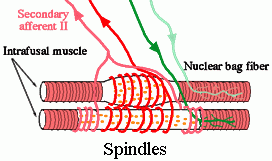
In our muscles:  As we constantly tense up some muscles andSpindles stop noticing what we are doing, we lose awareness of our bodies.

This muscle rigidity can disturb blood flow around the area causing stiffness, inflammation, pain, and a build up of toxins; the lack of elasticity sometimes causes the muscles to displace bones, wear out joints or to place too much pressure on nerves (as in a ‘twisted’ spine, ‘wear and tear’ or in ’sciatica’ respectively).


Endogenous chemicals

In our minds and feelings:  We have a ‘feeling’ about anything we perceive and about any situation that we encounter. Different feelings produce different chemical combinations in our bodies. 

These are normal in the short term but, when they go above a certain level, the toxic accumulation starts to affect our physical and mental health. Then, we start overdosing and to have side-effects from our own drugs, which are produced inside our bodies. Stress, anxiety and panic attacks are usually symptoms of this.

Feelings and unconscious muscle contractions come from the same (older) part of the brain


Dynamic Release gives you the power and the control to change all of the above.

If you would like to learn more about Dynamic Release or to book an assessment or treatment sessions in Scotland, please click here. Until further notice, treatments and seminars abroad are very limited and may be available only under certain conditions.


To learn what happens in a typical session, please click here.


Click here to read a few comments and pain management case studies from some past patients.


[Home] [About Us] [Services] [Contact] [Dynamic Release] [DR Session] [News & Articles] [Resources] [Search] [Techincal Information]